Imagine a five-year-old boy, abandoned by his parents as they depart on a military campaign, left in the care of relatives who see him not as family, but as a claim to an inheritance. This was the unlikely beginning for a child who would become one of Christianity’s most influential monastic founders: Saint Savvas the Sanctified (439–532 AD).
His story is not just a tale of asceticism, but an epic saga of spiritual rebellion, political influence, and miraculous foundations that shaped the Christian East. From a lonely cave to an audience with emperors, Savvas’s life redefined monasticism and left a legacy that still draws pilgrims today.
From Military Child to Desert Father
Savvas was born in Mutalaska, Cappadocia (modern Turkey), the son of a Greek military commander. His early life was marked by neglect and family conflict over his father’s estate. By age eight, seeking stability, he entered a monastery near Caesarea. A gifted student, he mastered the Scriptures, but faced immense pressure to abandon the cloister, return to the world, and marry.
He refused. At seventeen, he took monastic vows. His journey then led him to the spiritual heart of the Byzantine world: Jerusalem, and later, the desert monastery of the famed Saint Euthymius the Great.
The Cave, the Spring, and the Birth of a Lavra
Euthymius saw extraordinary potential in the young monk, calling him a “child-elder.” After years of obedience, Savvas withdrew to live as a hermit in a cave. For five years, his only breaks were weekly visits to the monastery for liturgy and a meal.
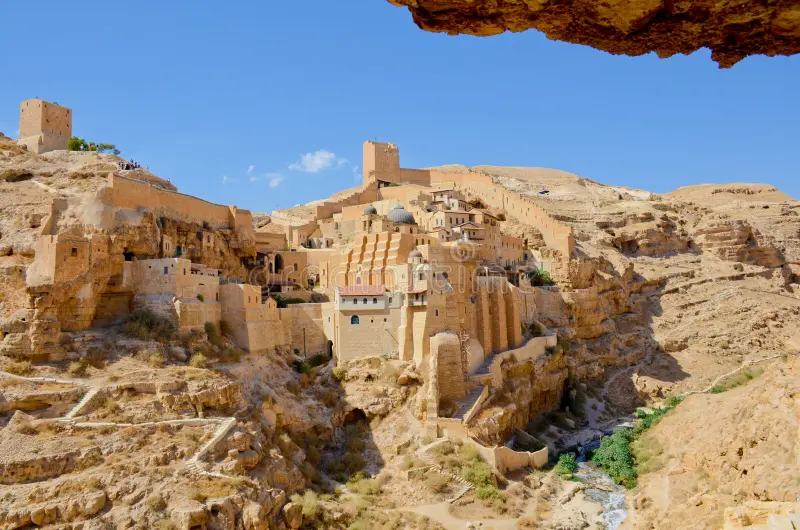
Disciples, yearning for his guidance, soon gathered. By 484 AD, their numbers forced a move to the Kedron Valley, south of Jerusalem. Here, Savvas founded the Great Lavra, later known as Mar Saba. This wasn’t a single building, but a unique monastic “city.” Young monks lived communally (cenobitic life), while elders dwelled in semi-solitude in individual huts, coming together only for solemn worship.
The challenges were immense. The desert site had no water. Through Savvas’s prayers, a miraculous spring welled up. During drought, his intercession brought rain. The sick and possessed were healed. Yet, human conflict persisted. Opposition from some monks forced him to temporarily withdraw and found a New Lavra near Thekoa.
Architect of Worship and Defender of Faith
Savvas’s impact stretched far beyond his desert community. In 494, he was ordained Archimandrite of all monasteries in Palaestina Prima. His most enduring contribution? The Jerusalem Typikon—the first comprehensive rule for Byzantine monastic church services, a liturgical blueprint that influenced centuries of worship.
He was also a fearless defender of orthodoxy. In an age of fierce theological debate, he opposed the Monophysites and Origenists. He traveled twice to Constantinople on bold diplomatic missions, confronting Emperor Anastasios I in 511 and the great Emperor Justinian I in 531, urging them to uphold orthodox doctrine.
A Sacred Bridge to Serbia: The Connection to Saint Sava
The monastery of Mar Saba formed a profound spiritual bridge across the centuries and nations. Its deepest bond was with the Serbian people and their patron saint, Saint Sava of Serbia (1175-1236).
During his first pilgrimage to the Holy Land in 1229, Saint Sava of Serbia visited Mar Saba, becoming a sabrat (brother) of the lavra. According to a powerful tradition, Saint Savvas the Sanctified had left a prophecy that after his death, his pastoral staff (žezal or paterica) should be given to an archbishop of royal lineage who shared his name. When the Serbian saint arrived, this prophecy was fulfilled. Saint Sava received the staff of Saint Savvas, a relic still preserved on Mount Athos. He was also gifted the miraculous Icon of the Theotokos of the Three Hands (now in Hilandar Monastery) and the Icon of the Theotokos the Milk-Giver.
Saint Sava of Serbia became a major benefactor. To secure safe haven for Serbian monks and pilgrims, he purchased properties across the Holy Land, including a hostel near Jerusalem, land on Mount Zion, and a church in Acre. In 1235, he formally donated all these endowments to the Great Lavra of Saint Savvas, cementing an eternal spiritual alliance.
This relationship was not fleeting. Historical charters, like that of Empress Mara Branković, show a formal agreement between the Serbian Church and the Jerusalem Patriarchate. Serbian monks actually governed Mar Saba for 130 years, restoring order, building a great tower with a chapel dedicated to Saint Simeon, and protecting the lavra from bandits. Their physical and spiritual footprint in the Kedron Valley remains a testament to this extraordinary fraternity.

The Relic’s Incredible Odyssey: A 900-Year Journey Home
Saint Savvas died in 532 AD. But his story had a dramatic, centuries-long postscript.
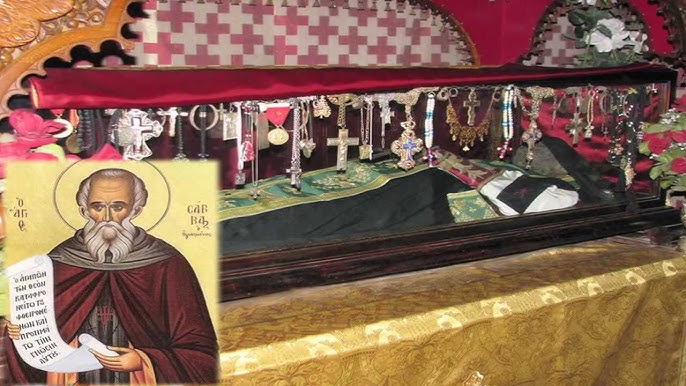
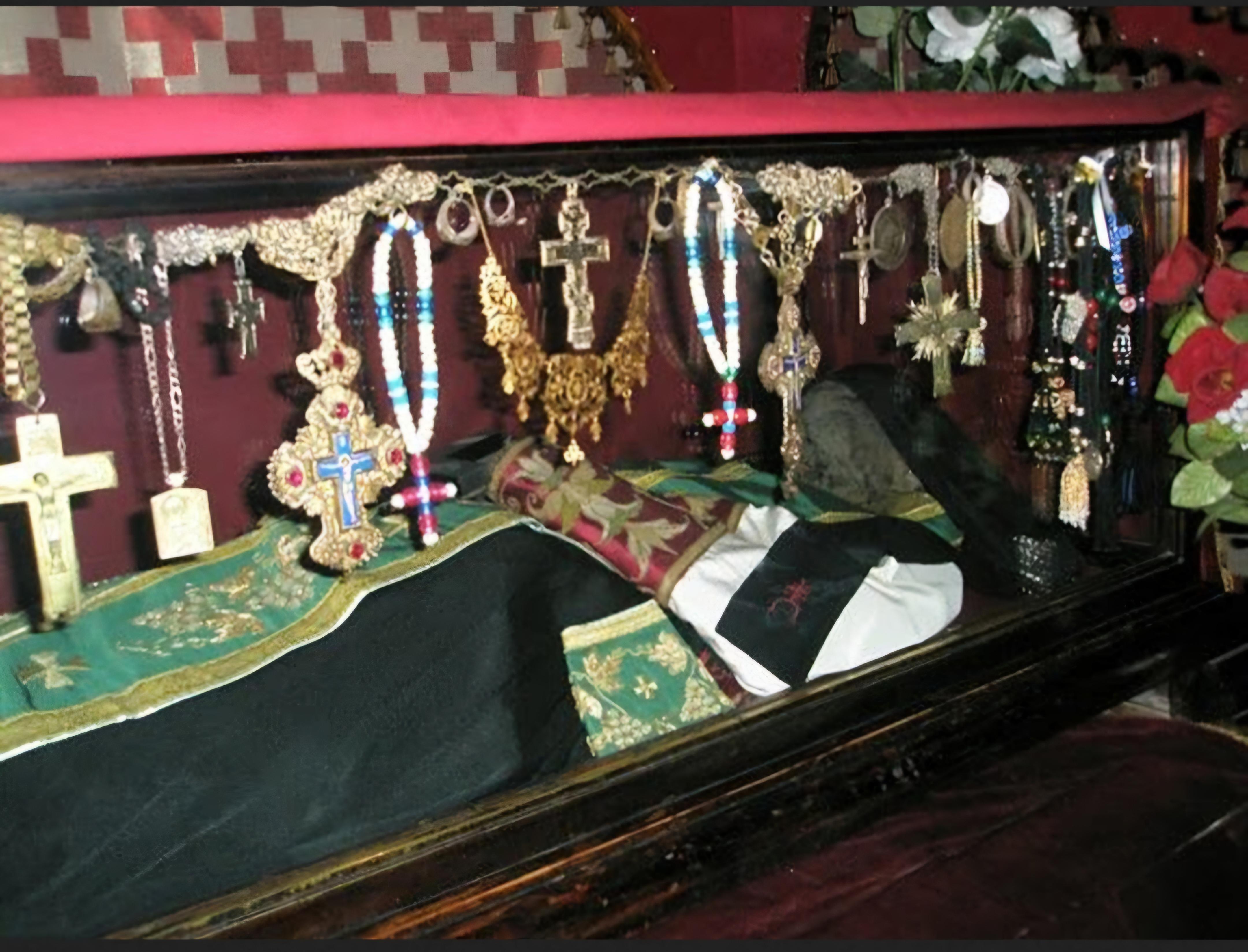
In the 12th century, Crusaders took his incorrupt relics to Italy, where they rested in a church in Venice. For nearly nine centuries, the founder was absent from his lavra.
Then, in the 20th century, something extraordinary happened. The saint, it is said, began to “agitate” for his return. According to accounts from monks of Mar Saba, Saint Savvas appeared in dreams to Pope John XXIII, urging repatriation. When nothing happened, he reportedly also appeared to Pope Paul VI. Guards at the Venetian church even told of strange occurrences—the saint’s relic seeming to strike the glass of its coffin.
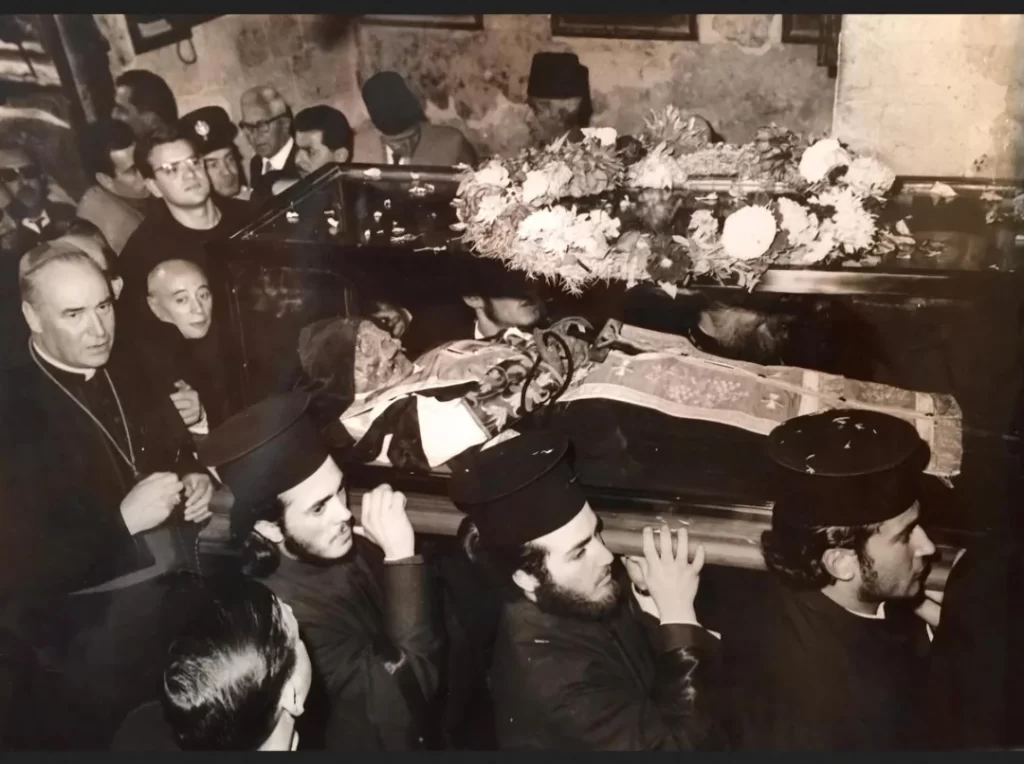
In 1965, in a profound ecumenical gesture, Pope Paul VI returned the relics to the Orthodox Church. The reception was emotional. When the Orthodox delegation arrived, they verified the relic’s authenticity by a telling detail: one eye was missing, consistent with historical accounts that Monophysites had harmed the body.
As they prepared to re-vest the saint in Orthodox robes, a miracle facilitated the task. After prayer, the ancient, incorrupt arms lifted easily, allowing the vestments to be changed. Upon the relic’s return to the Judean desert, a rainbow appeared over the lavra for a month, seen as a celestial welcome.
Legacy: The Living Monastery of Mar Saba
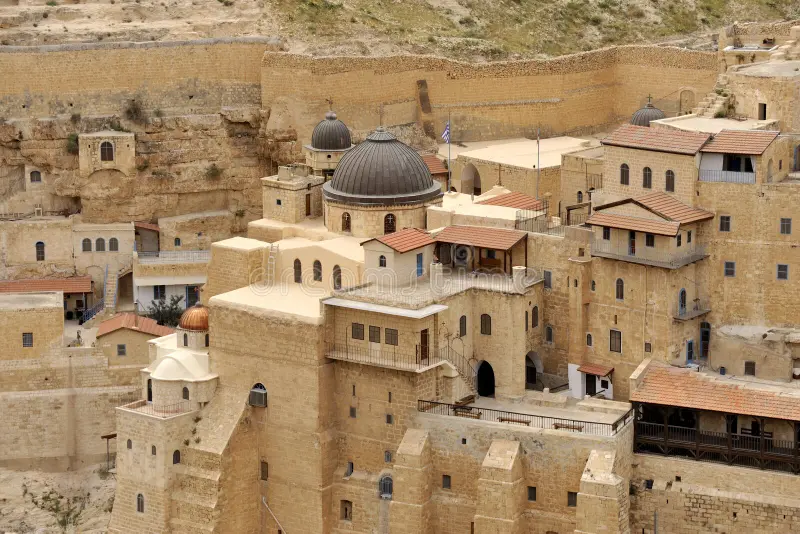
Today, Mar Saba Monastery remains one of the oldest continuously inhabited monasteries in the world, a stunning cliff-hanging complex in the Judean desert. It’s a strictly male-only sanctuary—women are permitted only to view it from a special women’s tower.
The monastery was a pivotal site for other saints, including John of Damascus. The deep historical bond with Serbia, forged through Saint Sava, highlights Mar Saba’s role as a universal Orthodox hearth, drawing faithful from across the Slavic and Greek worlds for centuries.
Why Saint Savvas Matters Today
In an age of constant noise and distraction, the story of Saint Savvas calls us to consider the power of silence, perseverance, and unwavering conviction.
He transformed hardship into holiness: His lonely childhood forged a resilient spirit.
He built community in isolation: He created a revolutionary model for communal spiritual life in the harsh desert.
He forged international spiritual bonds: His lavra became a crucial bridge, most notably for the Serbian Orthodox Church.
He engaged with power for his faith: He was not a recluse, but an active participant in the theological and political battles of his time.
His legacy physically endured: The incredible journey of his relics symbolizes the enduring, living nature of spiritual tradition.
His feast day is celebrated on December 18. The monastery he founded, Mar Saba, stands not as a museum, but as a vibrant testament to a man whose faith moved mountains, brought water from rock, built bridges between nations, and called him home across oceans and centuries.